


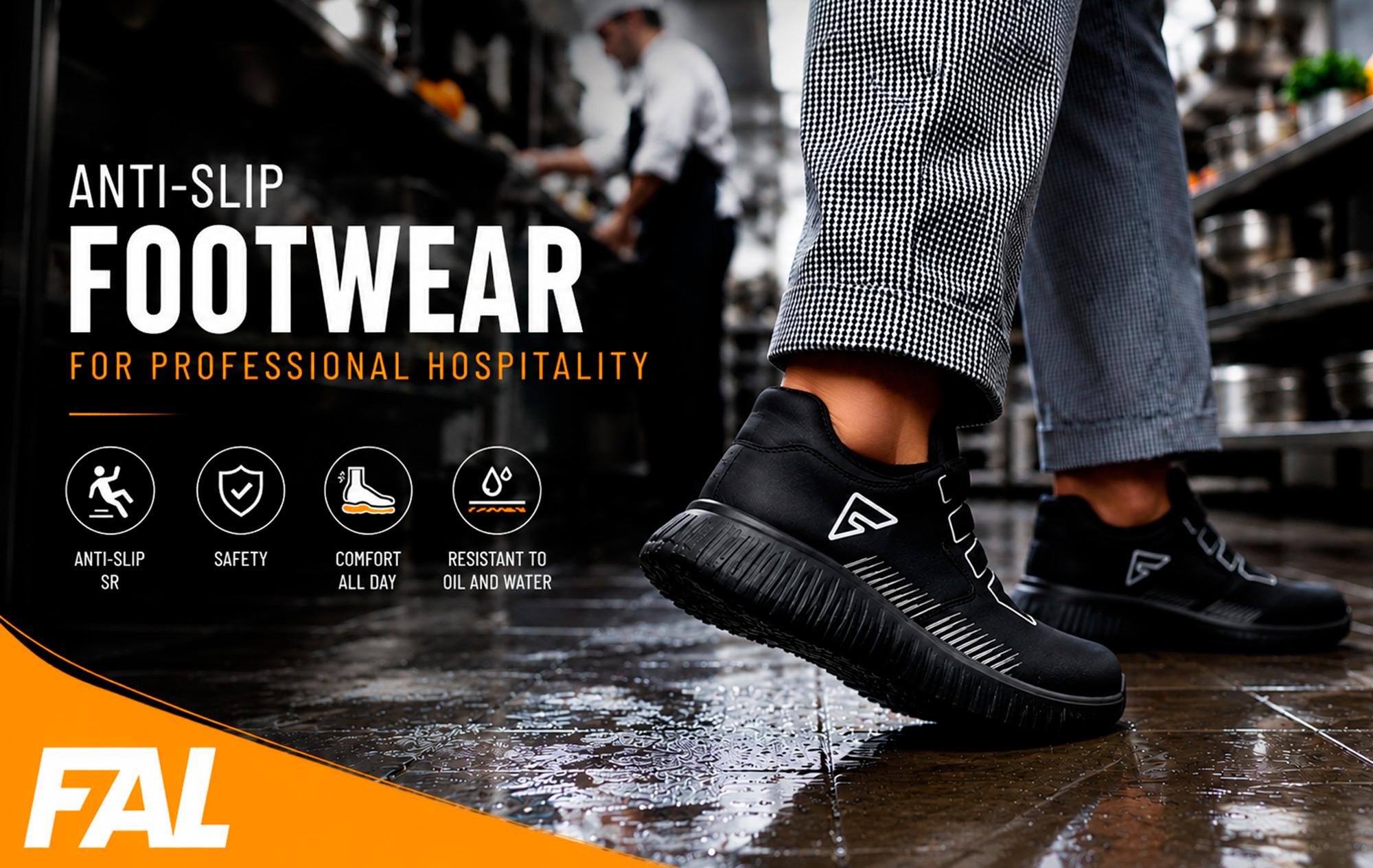
Non-slip footwear for the hospitality industry and professional kitchens: what to look for before buying
In the hospitality industry, a fall can happen in a matter of seconds. Wet floors, grease, temperature changes, cold stores, a fast-paced environment and long working hours make footwear a critical factor for both worker safety and comfort.
However, not all ‘non-slip’ footwear offers the same level of protection. Choosing the right footwear involves understanding regulations, materials, ergonomics and the specific type of work being carried out.
We explain what you should check before buying non-slip footwear for the hospitality industry and professional kitchens, and what the differences are between safety shoes and occupational footwear.
Why is the risk of slipping so high in the hospitality sector?
The hospitality sector is one of the work environments with the highest exposure to:
- Grease and oils
- Water and detergents
- Constant changes in surface type
- Slippery or wet floors
- Rapid movements and continuous turning
- Long shifts spent on your feet
In a professional kitchen, footwear must do more than just prevent slips. It must also:
- Reduce fatigue
- Maintain stability
- Insulate against cold or heat
- Resist cleaning chemicals
- Withstand intensive daily use
That is why choosing a model based solely on appearance or price often leads to comfort issues, injuries or premature wear and tear.
What does it really mean for footwear to be ‘slip-resistant’?
The key lies in current European regulations.
Today, the most important marking is:
SR = slip resistance
The SR test assesses the grip of footwear on ceramic surfaces contaminated with glycerine.
In practice, this means that the shoe has been tested under conditions similar to:
- Industrial kitchens
- Washing areas
- Greasy surfaces
- Damp catering areas
For the hospitality sector, the SR marking is practically essential.
Difference between safety footwear and occupational footwear
This is where many companies get it wrong.
1. Safety footwear (EN ISO 20345)
Includes an impact-resistant toe cap.
It is recommended for:
- Commercial kitchens
- Catering
- Load handling
- Food warehouses
- Food industry
Within the Fal Seguridad ranges, one of the most suitable lines is the Food Tech Range, designed specifically for food and professional hospitality environments.
This line is certified to:
- EN ISO 20345:2022 / A:1:2024
- S2 + HI + CI + SR + FO
What does this offer in day-to-day use?
• Impact protection for toes
• Slip resistance
• Insulation against cold and heat
• Resistance to hydrocarbons
• Materials suitable for intensive use
2. Occupational or work footwear (EN ISO 20347)
Does not include a safety toe cap.
It is aimed at professionals where the following are paramount:
- Comfort
- Lightweight
- Mobility
- Prolonged use
It is ideal for:
- Dining room
- Reception
- Customer service
- Cleaning staff
- Professionals who are constantly on their feet
The Ergonomic Range is particularly well-suited here.
Its standards:
• EN ISO 20347:2022 / A:1:2024
• O2 + HI + CI + SR + HRO + FO
It stands out for:
• Excellent ergonomics
• Great comfort during long shifts
• High thermal resistance
• Flexibility and lightness
• Excellent slip-resistant performance
What to look for before buying footwear for the hospitality industry
1. A truly slip-resistant sole
It’s not enough to simply read ‘antislip’ or ‘slip-resistant’.
Look for:
- SR certification
- Liquid drainage channels
- Good sole tread pattern
- Grease-resistant compounds
2. Comfort during long shifts
Many professionals spend between 8 and 12 hours on their feet.
Poor footwear causes:
- Muscle fatigue
- Lower back pain
- Plantar strain
- Knee discomfort
Ergonomics is just as important as safety.
3. Breathability
Kitchens generate constant heat.
Footwear must:
• Wick away moisture
• Maintain thermal comfort
• Prevent overheating
4. Ease of cleaning
In the catering industry, hygiene and maintenance are essential.
Materials must:
• Be easy to clean
• Resist chemicals
• Retain their properties after frequent washing
5. Thermal protection
In the hospitality industry, the following coexist:
• Ovens
• Steam
• Cold rooms
• Hot floors
Certifications such as:
• HI (heat insulation)
• CI (cold insulation)
• HRO (resistance to contact heat)
offer real added value.
Quick checklist by workstation
Professional kitchen
Priorities:
- SR mandatory
- High stability
- Grease resistance
- Easy to clean
- Additional protection
Recommendation:
- Food Tech Range
Dining room and customer service
Priorities:
- Lightweight
- Ergonomics
- More versatile design
- Long-lasting comfort
Recommendation:
- Ergonomic Range
Cleaning and maintenance
Priorities:
- Extreme grip
- Chemical resistance
- Flexibility
- Partial waterproofing
Food industry
Priorities:
- Hygiene
- Safety
- Protection
- High durability
Footwear directly influences productivity and sick leave
A comfortable worker:
- Tires less easily
- Maintains better stability
- Makes fewer mistakes
- Works more safely
That is why an increasing number of hospitality businesses view professional footwear as an investment in prevention and performance, not merely as mandatory PPE.
Choosing the right footwear for the hospitality industry goes far beyond simply looking for a model “that doesn’t slip”.
The ideal combination should include:
- SR certification
- Ergonomics
- Durability
- Suitability for the specific role
- Comfort for long, demanding shifts
For kitchen, catering and food industry environments, specialised ranges such as the Food Tech Range offer an excellent balance between safety and performance.
And for roles where comfort and mobility are priorities, the Ergonomic Range provides advanced ergonomics and high daily comfort.
Because in the hospitality industry, good footwear doesn’t just protect: it also improves the working day.