


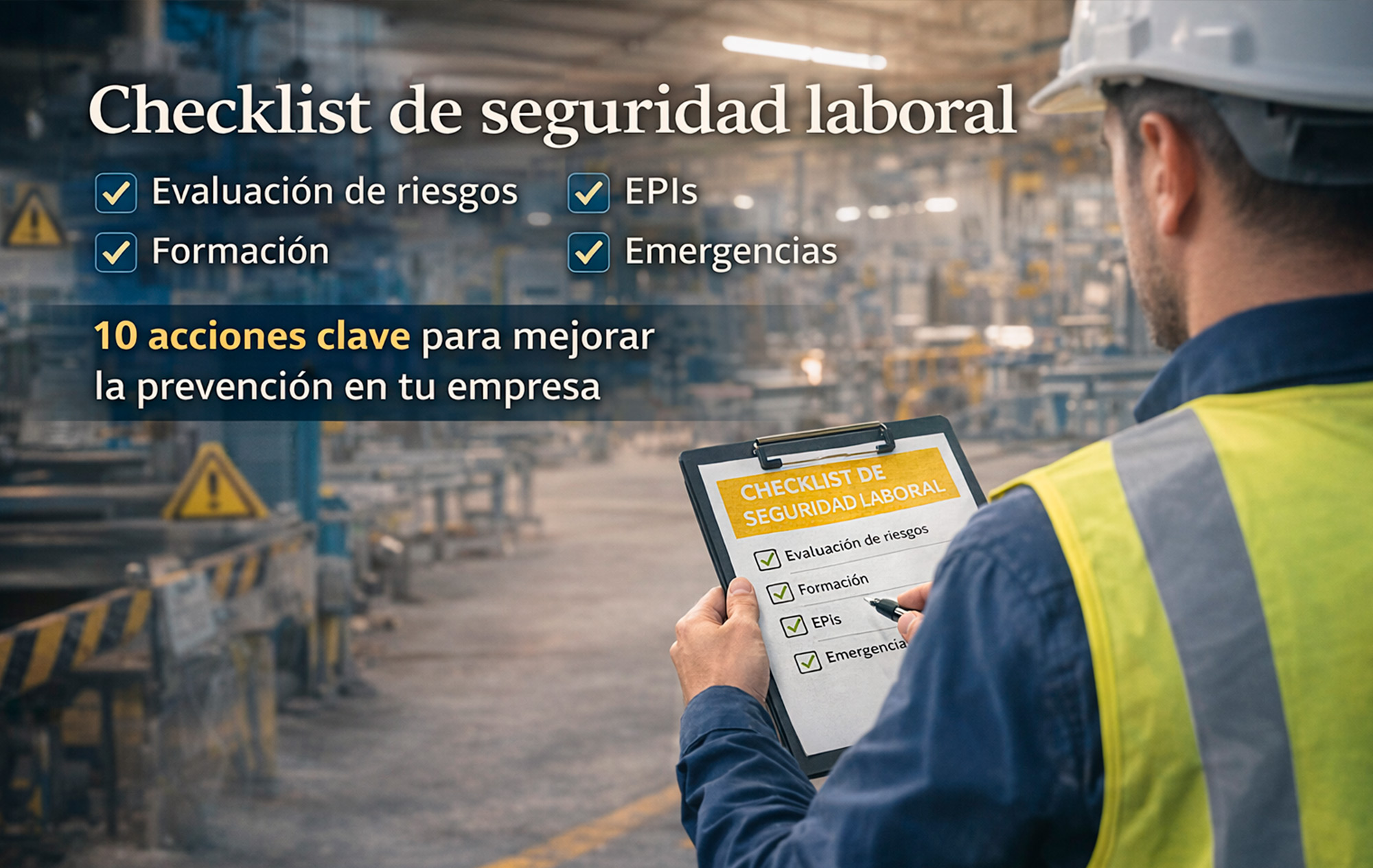
Workplace safety checklist: 10 key steps to improve safety in your company
Every 28 April marks World Day for Safety and Health at Work, an initiative launched by the International Labour Organisation to raise awareness of the importance of preventing accidents and occupational illnesses.
For businesses, this day offers a good opportunity to pause, review their processes and strengthen their safety culture. Health and safety at work is not just a legal obligation: it is also an investment in well-being, productivity and business sustainability.
Rather than remaining at a theoretical level, here at Fal Seguridad we want to use this occasion to suggest something practical: a basic health and safety checklist that any business can use to review its current situation and identify potential areas for improvement.
1. UPDATED RISK ASSESSMENT
Risk assessment is the starting point for any effective prevention system.
It is essential to ensure that:
- It is up to date.
- It takes into account changes in processes, machinery or facilities.
- It covers all workstations.
Many companies carry out the initial assessment but go years without reviewing it, which can leave new risks unaddressed.
2. SAFETY TRAINING FOR EMPLOYEES
One of the most common causes of workplace accidents is a lack of adequate training.
Check whether:
- Employees have received specific training for their role.
- Regular refresher courses are held.
- New employees receive training before starting work.
Training not only reduces risks, but also raises safety awareness.
3. CORRECT USE OF PERSONAL PROTECTIVE EQUIPMENT (PPE)
PPE is an essential safeguard against many workplace hazards.
Check that:
- Workers have the appropriate PPE.
- It is used correctly and consistently.
- It is inspected and replaced when necessary.
PPE that is in poor condition or not fitted properly loses its effectiveness.
4. CLEAR AND VISIBLE SIGNAGE
Safety signage helps prevent accidents and guide workers in hazardous situations.
It is advisable to check that:
- The signs are clear, visible and understandable.
- They are in good condition.
- They correctly indicate hazards, emergency exits and dangerous areas.
Appropriate signage can prevent many incidents.
5. MAINTENANCE OF EQUIPMENT AND MACHINERY
Equipment or machinery in poor condition can pose a significant risk.
Include the following in your checklist:
- Regular inspections of machinery.
- Maintenance records.
- Replacement of faulty equipment.
Preventive maintenance reduces both accidents and unexpected downtime.
6. TIDINESS AND CLEANLINESS IN THE WORKPLACE
Tidiness and cleanliness are key factors in preventing falls, collisions or fires.
It is important to check that:
- Work areas are clear.
- There are no obstacles in corridors or exits.
- Materials are stored safely.
An organised environment is also a safer environment.
7. CLEAR EMERGENCY PROCEDURES
All companies must have clear procedures in place for dealing with emergencies.
Check that:
- There is an emergency and evacuation plan.
- Employees know how to respond in the event of a fire or other emergency.
- Regular drills are carried out.
Speed and coordination in an emergency can make all the difference.
8. INTERNAL COMMUNICATION ON SAFETY
Prevention is most effective when it is part of the company culture.
Some recommended measures include:
- Regular safety meetings.
- Reporting of incidents or near-misses.
- Channels for employees to suggest improvements.
The involvement of the entire workforce is key.
9. INVESTIGATION OF INCIDENTS AND ACCIDENTS
Every incident is an opportunity for improvement.
It is important to:
- Analyse the causes.
- Identify preventive measures.
- Share the findings with the team.
It is not about assigning blame, but about preventing it from happening again.
10. GENUINE COMMITMENT FROM MANAGEMENT
No safety strategy works without management’s commitment.
When prevention is part of the business strategy:
- Adequate resources are allocated.
- A culture of prevention is fostered.
- The number of accidents is significantly reduced.
Workplace safety starts at the top and is reinforced by everyone’s involvement.
A GOOD TIME TO REVIEW SAFETY IN YOUR COMPANY
World Day for Safety and Health at Work is the perfect occasion to remember that prevention should not be limited to complying with regulations, but must be integrated into the day-to-day running of the company.
Regularly reviewing these aspects can help identify risks, improve working conditions and protect people.
Because ultimately, behind every preventive measure lies something far more important: the safety and well-being of those who form part of the company.